
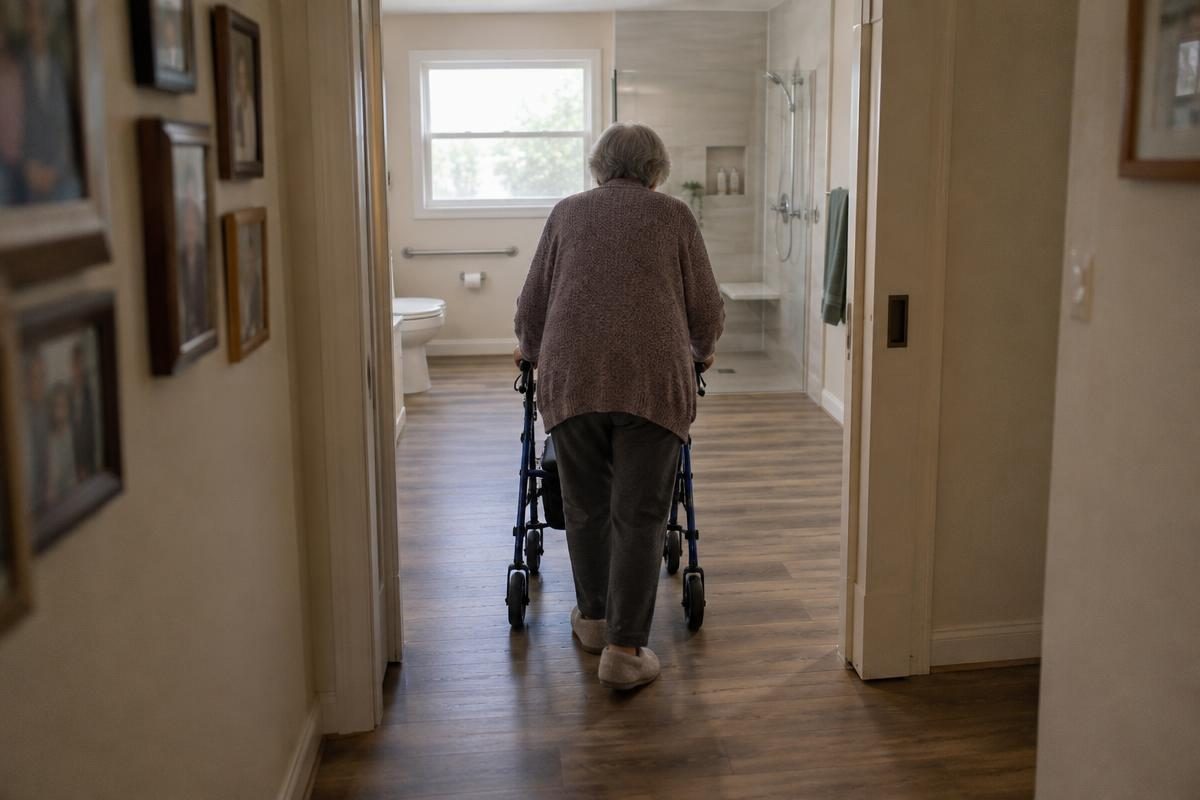
A handicap shower remodel replaces a bathtub or curbed stall with a bathing area someone with limited mobility can enter on wheels, with a walker, or by sliding across from a seat, then adds the bench, grab bars, and controls that let them bathe safely. About one in four adults over 65 falls each year, according to the CDC, and the bathroom is one of the riskiest rooms in a house: wet tile, hard edges, and a tub wall to step over. Removing that wall is one of the most direct steps toward reducing the risk of falls.
Most accessible shower projects borrow their measurements from section 608 of the 2010 ADA Standards for Accessible Design. The Americans with Disabilities Act does not cover private single-family homes, but its numbers are the best tested accessibility baseline to build to.

Our team focuses on three things: safe entry, stable support, and full mobility. That means zero-threshold floors, strategically placed grab bars for bathroom safety, a built-in seat, and room for wheelchair access. This page covers the shower itself; for a full accessible bathroom remodel that includes the toilet, vanity, and door, our whole-room bathroom remodeling service handles the rest.
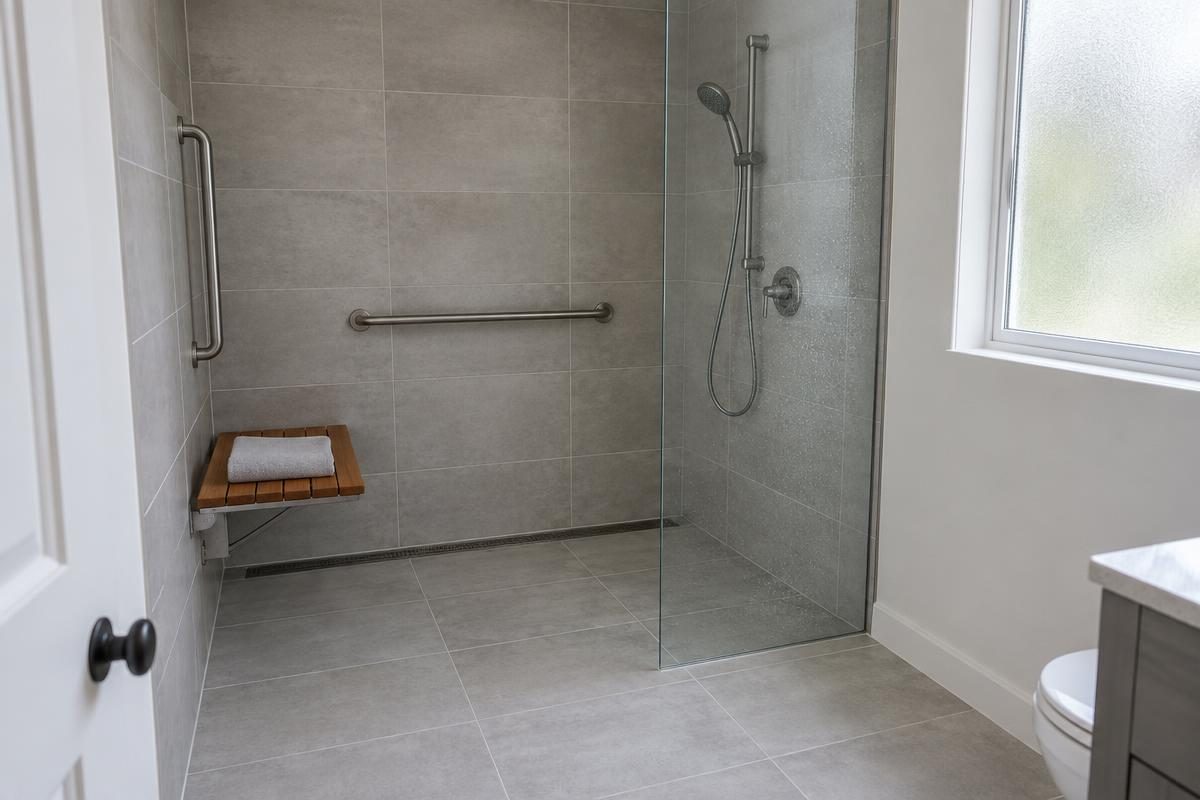
Roll-In or Transfer: Which Layout Fits the User?
The layout follows the person, not the room. Someone who stays in a wheelchair or rolling bath chair needs a roll-in shower. Someone who can stand briefly and slide onto a seat may do better with a smaller transfer stall, and a cane user who stands to bathe often needs only a low-threshold walk-in.
| Layout (ADA section) | Minimum inside size | Entry | Best fit |
|---|---|---|---|
| Transfer type (608.2.1) | 36 x 36 in | 36 in wide | People who move from a wheelchair to a seat |
| Standard roll-in (608.2.2) | 30 x 60 in | 60 in, full long side | Wheelchair users, caregiver help |
| Alternate roll-in (608.2.3) | 36 x 60 in | 36 in, at one end | Rooms where a 60 in opening won’t fit |
| Low-threshold walk-in shower | No ADA size | Small lip | Walker and cane users who stand |
Outside clearance matters too: 36 by 48 inches in front of a transfer stall, 30 by 60 inches alongside a wheel-in one. A wheelchair accessible bathroom also needs a 60 inch diameter turning space (304.3.1) and a door with at least 32 inches of clear width (404.2.3), measured the way our guide to wheelchair accessible entrances explains. If a caregiver helps with bathing, a 60 by 60 inch layout lets them stand beside the chair without stepping into the spray.
How a Curbless Shower Keeps Water In
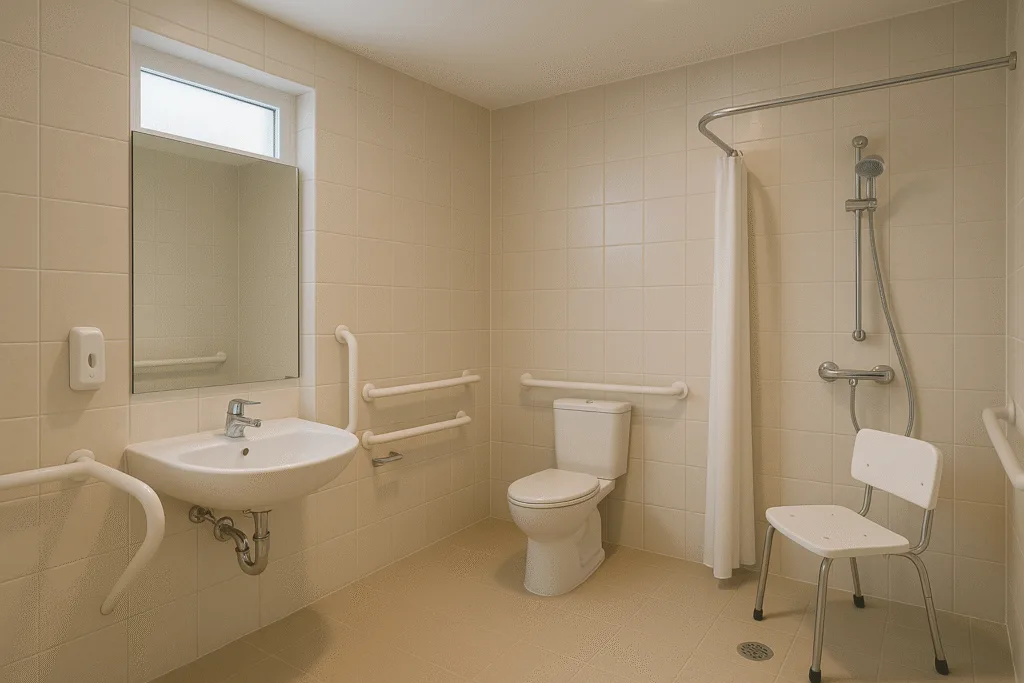
Water stays in a barrier-free shower because the floor does the job a curb used to do. It pitches toward the drain, typically 1/4 inch per foot under plumbing codes, and a linear drain along the entry or back wall catches water before it reaches the rest of the bathroom. A waterproof membrane under the tile, carried up the walls, protects the subfloor if anything gets past.
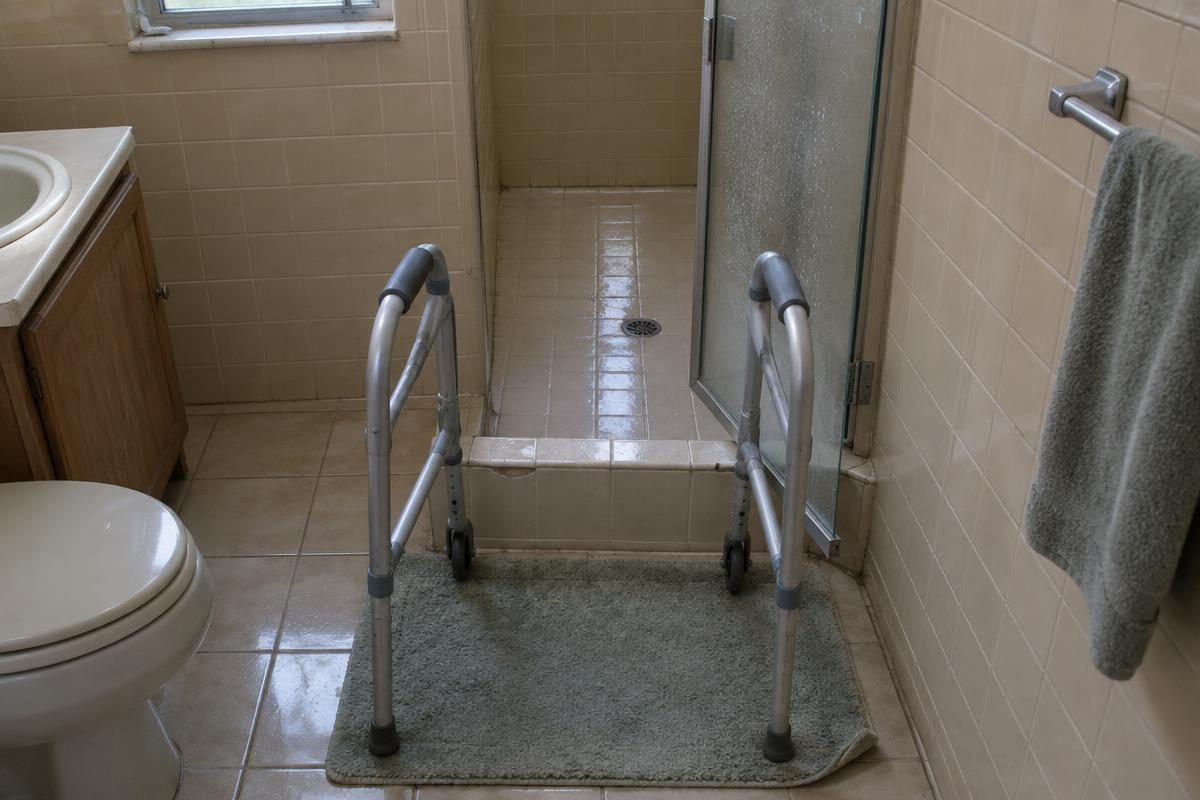
The hard part is building that pitch without a lip. On a wood-framed floor, the area under the shower floor usually has to be recessed by lowering or reframing joists (with an engineer’s sign-off where framing is cut); on a slab, the section is cut out and re-poured. Conversions quietly fail here when the shower pan is built on top of the old floor and the entry ends up with a ramp or a step.
Section 608.7 caps a roll-in threshold at 1/2 inch. A collapsible rubber water dam stays under that and folds flat beneath a wheel. A weighted curtain usually beats a glass door, because a door can block the controls or the path onto the seat, which 608.8 prohibits.
Seat, Grab Bar, and Control Placement
Placement matters more than hardware: a valve on the wrong wall makes a compliant-looking install unusable from a seat.
Built-In and Folding Shower Seats
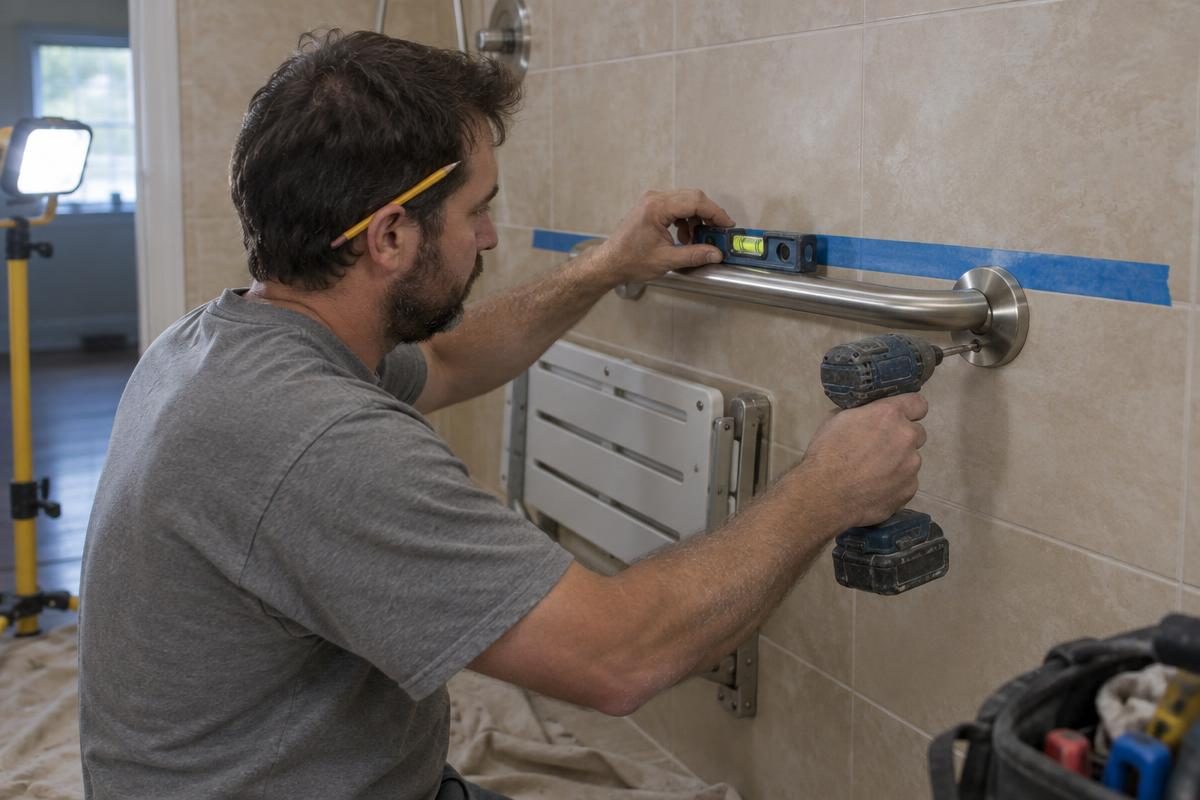
The top of a shower seat belongs 17 to 19 inches above the floor (610.3), close to wheelchair height, so a sideways transfer stays level. A wheel-in compartment takes a folding shower seat on the wall next to the controls; a transfer stall can take a fixed bench. Either must withstand 250 pounds of force (610.4), and we recommend seats rated for at least 300 pounds with a textured, non-slip surface.
Grab Bars Anchored Into Blocking
Horizontal bars go 33 to 36 inches above the floor, measured to the top of the gripping surface (609.4). Each bar, its fasteners, and the wall behind it must resist 250 pounds (609.8), which is why we anchor them into wood blocking, never drywall or tile alone. Where there’s a seat, bars run on the back wall and the wall opposite it, never above the seat.
Controls, Faucet, and Handheld Spray
The controls, faucet, and spray unit sit 38 to 48 inches above the floor. In a transfer stall they go on the wall opposite the seat, within 15 inches of its centerline; in a standard wheel-in layout with a seat, they sit on the back wall within 27 inches of the seat wall (608.5). Each must work with one hand, without tight grasping, pinching, or wrist twisting (309.4). Lever handles pass. Small round knobs don’t.
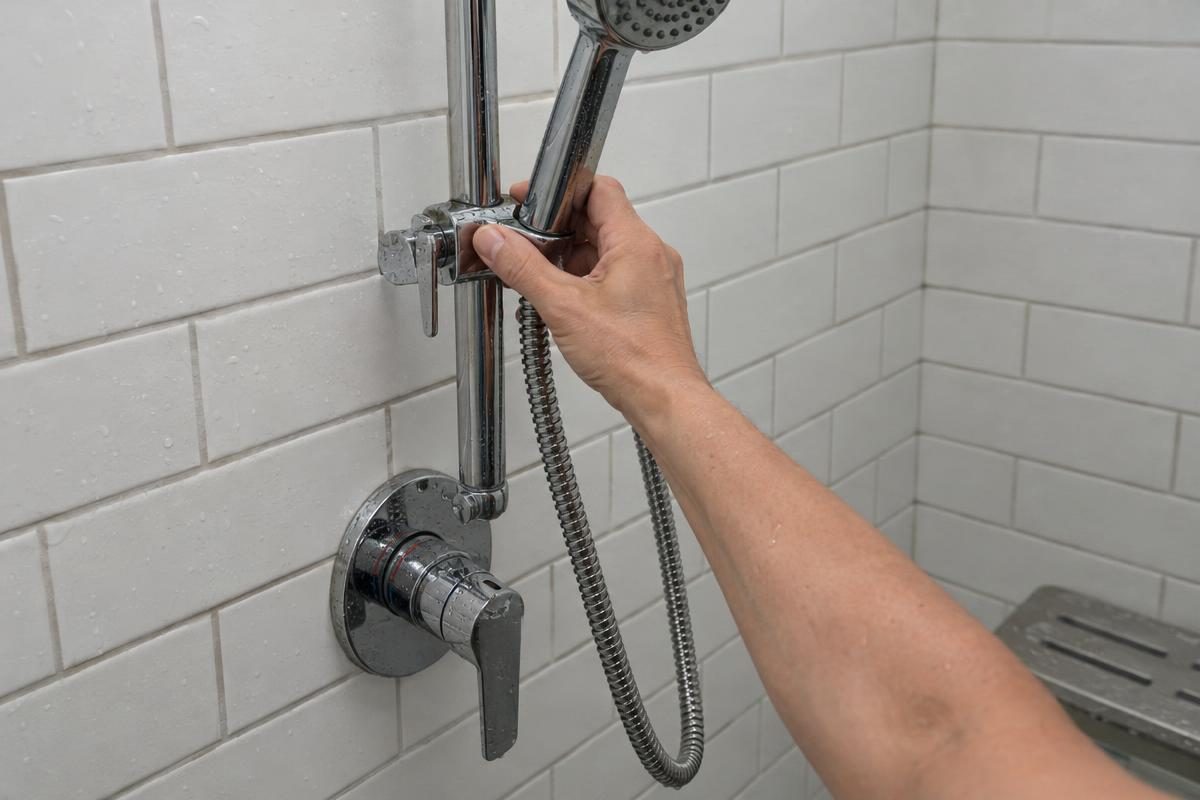
Section 608.6 calls for a handheld spray with a hose at least 59 inches long that doubles as a fixed shower head, and caps water at 120°F. A slide bar lets someone in a seated position set the height, as long as it doesn’t block a grab bar. A thermostatic valve holds that limit.
Flooring That Grips When Wet
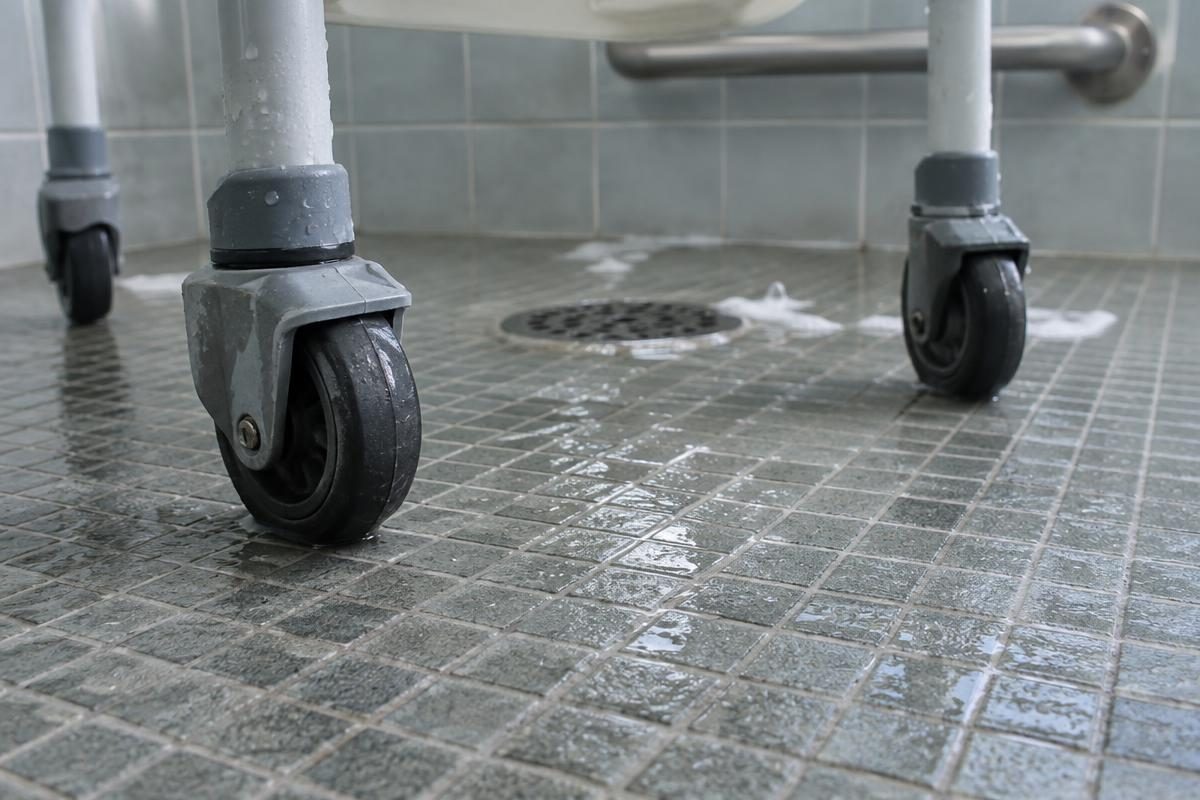
Polished tile looks great in a magazine spread. In an accessible bathroom, it’s a liability. Small mosaic tile, 2 by 2 inches or less, adds grout lines for grip and follows the pitch to the drain easily; textured porcelain, slip-resistant vinyl, and micro-aggregate coatings also hold traction when wet. Run the same surface into the rest of the room so no transition strip catches wheelchair casters.
What It Costs and Who Helps Pay
Typical Handicap Shower Remodel Price Ranges
A basic curbless shower conversion with grab bars, a new pan, and non-slip flooring typically runs $2,000 to $5,000. A built-in bench, a widened doorway, adjustable fixtures, and premium tile push the range to $7,000 to $15,000. Structural work such as relocating plumbing, recessing the floor, or reinforcing walls can add $2,000 to $4,000 more.
When we review another contractor’s bid for a tub conversion, the first line item we look for is the waterproof membrane. Leaving it out saves $300 to $500, but a slow leak can rot the subfloor within two to three years, and that repair costs about five times as much as doing it right the first time.
Planning to age in place pays too. Blocking installed behind every wall now lets you add bars later without opening tile. An age-in-place layout usually costs 10% to 15% more than a standard bathroom remodel, while retrofitting after a standard renovation costs three to four times as much.
Medicare, Medicaid, and Veterans Programs
Original Medicare generally does not pay for a handicap bathroom remodel or for grab bars, which it doesn’t treat as durable medical equipment. Some Medicare Advantage plans cover safety items as a supplemental benefit, state Medicaid waivers often fund home modifications, and eligible veterans can apply for the VA’s HISA and Specially Adapted Housing grants. Most want approval before work starts.
Converting a Bathtub: Four Questions That Set the Scope
- Is the alcove at least 60 by 30 inches? Then a standard roll-in shower usually fits the old tub’s footprint, which keeps the drain move short.
- Does the user transfer rather than wheel in? Then a 36 by 36 inch transfer stall frees floor space for the clearance in front of it.
- Is the door under 32 inches of clear width? Widen it in the same project. A perfect handicap bathroom behind a 28 inch door is unusable.
- Is mobility likely to decline? Build curbless now, even for someone who walks today. Universal design, planning a space that works at any age or ability, costs far less in the first project than in a second.
Our Remodeling Process, Step by Step
We don’t use a one-size-fits-all bathroom design template. Here’s how a typical handicap remodeling project moves from consultation to completion.
- Assessment: We measure the existing bathroom layout, photograph plumbing access, and discuss your daily routine.
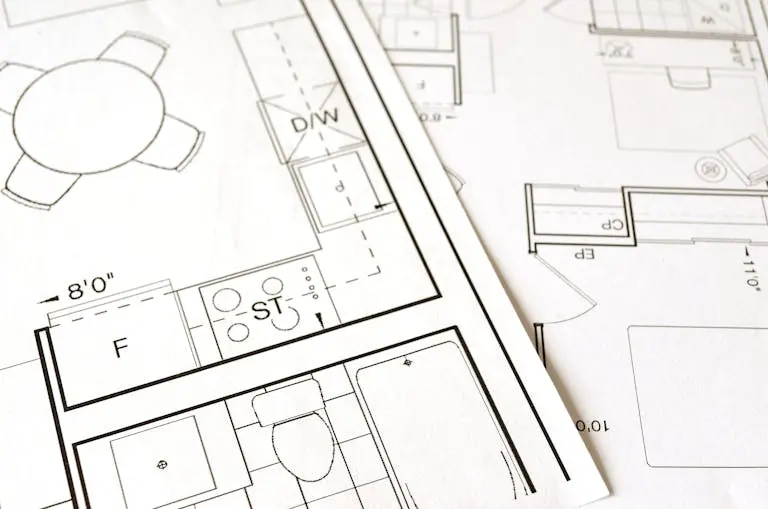
- Design: You receive a floor plan showing fixture placement, grab bar locations, and entry width, with any floor recess flagged up front.
- Demolition and Prep: Old fixtures come out, and we install waterproof membranes, blocking for bars, and any plumbing changes.
- Installation: Tile, fixtures, seats, bars, and the drain system go in. We test water flow and drainage before finishing.
- Final Walkthrough: You test every feature, and we adjust bar heights and valve positions on the spot.
Layout Mistakes That Undo an Accessible Shower
The biggest accessibility failures are about layout, not tile. Controls on the wrong wall force a seated user to reach across their body. A shower curtain rod set too low lets the curtain drag and creates a tripping hazard. A conversion kit dropped onto the old floor leaves a shower threshold taller than the 1/2 inch the ADA allows, and it catches casters every time.
Threshold ramps are a patch, not a fix: a 2 inch lip at the 1:12 slope in our guide to maximum handicap ramp slope needs 24 inches of ramp that a small bathroom rarely has. Each of these problems is preventable with proper planning. That’s why working with a specialist in accessibility construction matters more than finding the cheapest bid.
Start With an In-Home Assessment
Start by measuring the tub or shower stall and the bathroom door, then note how the user bathes today: standing, transferring, or rolling in. Those three facts decide most of a handicap shower remodel. Send us a message through our contact form, and we’ll evaluate the space, recommend a layout, and provide a detailed estimate.
Handicap Shower FAQ
How much does it cost to put in a handicap shower?
A basic curbless installation typically costs $2,000 to $5,000, and seating, custom tile, and adjustable fixtures push it to $7,000 to $15,000. Relocating plumbing or recessing the floor adds $2,000 to $4,000.
How do I convert my shower to a handicap accessible one?
Replace the curbed stall or bathtub with a curbless wheel-in or a 36 by 36 inch transfer stall, depending on how the user enters. Add a folding seat at 17 to 19 inches, grab bars at 33 to 36 inches on solid blocking, and a handheld spray on a slide bar, then widen the door to at least 32 inches clear.
Will Medicare pay for an ADA bathroom remodel?
Original Medicare generally does not cover an accessible bathroom remodel or grab bars. Some Medicare Advantage plans, Medicaid waivers, and VA grants may fund part of the work, so check each program before construction begins.
What is a good size for an accessible bathing area?
A standard roll-in shower should be at least 30 inches wide by 60 inches deep inside, with a 60 inch entry. With a caregiver assisting, 60 by 60 inches gives both people room. Keep any threshold at 1/2 inch or lower.