
Handicap bathroom remodeling rebuilds a bathroom so a person who uses a wheelchair, walker, or cane can bathe, transfer, and groom safely without help. Wider doorways, zero-threshold showers, and lever-handle faucets remove the friction that makes daily routines exhausting or dangerous.
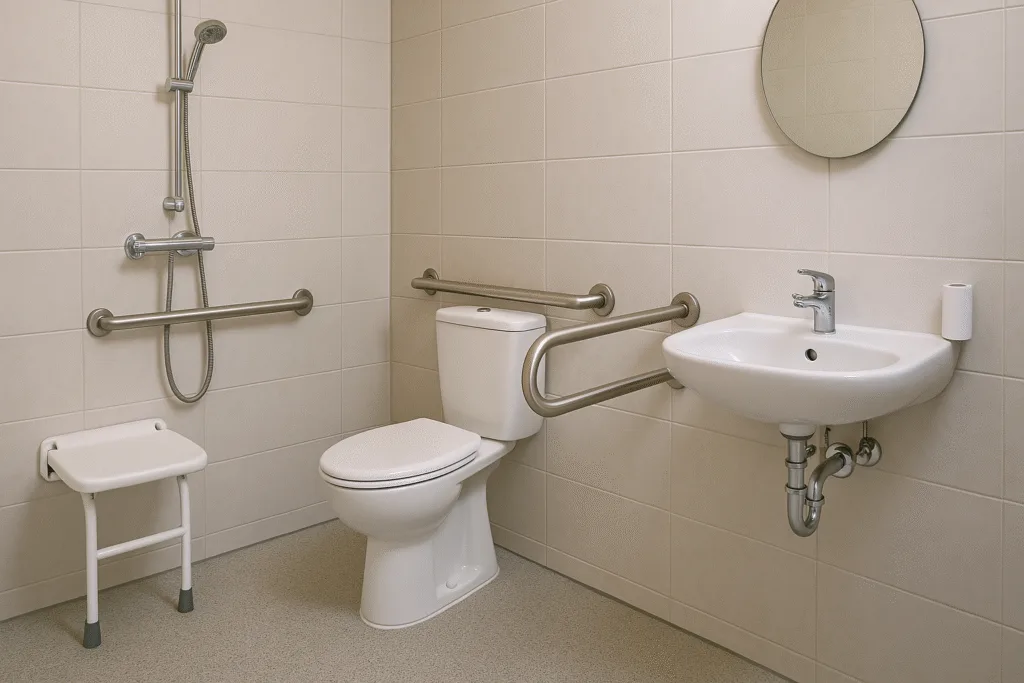
Our contractors specialize in compliant renovations. We install roll-in showers, support bars, non-slip floors, and adjustable fixtures designed around real-world needs. The goal is simple: an accessible home where you or your loved one can move freely, bathe safely, and age in place with dignity.
A single support bar does not make a room accessible. Real accessibility comes from coordination: floor materials, fixture height, turning space, and door swing all have to work together, and a gap in any one of them can undo the rest. A built-in bench helps very little if the wheelchair can’t clear the doorway to reach it.
What Our Accessible Bathroom Remodel Services Include
Typical work, scoped to the person who will use the room, includes:
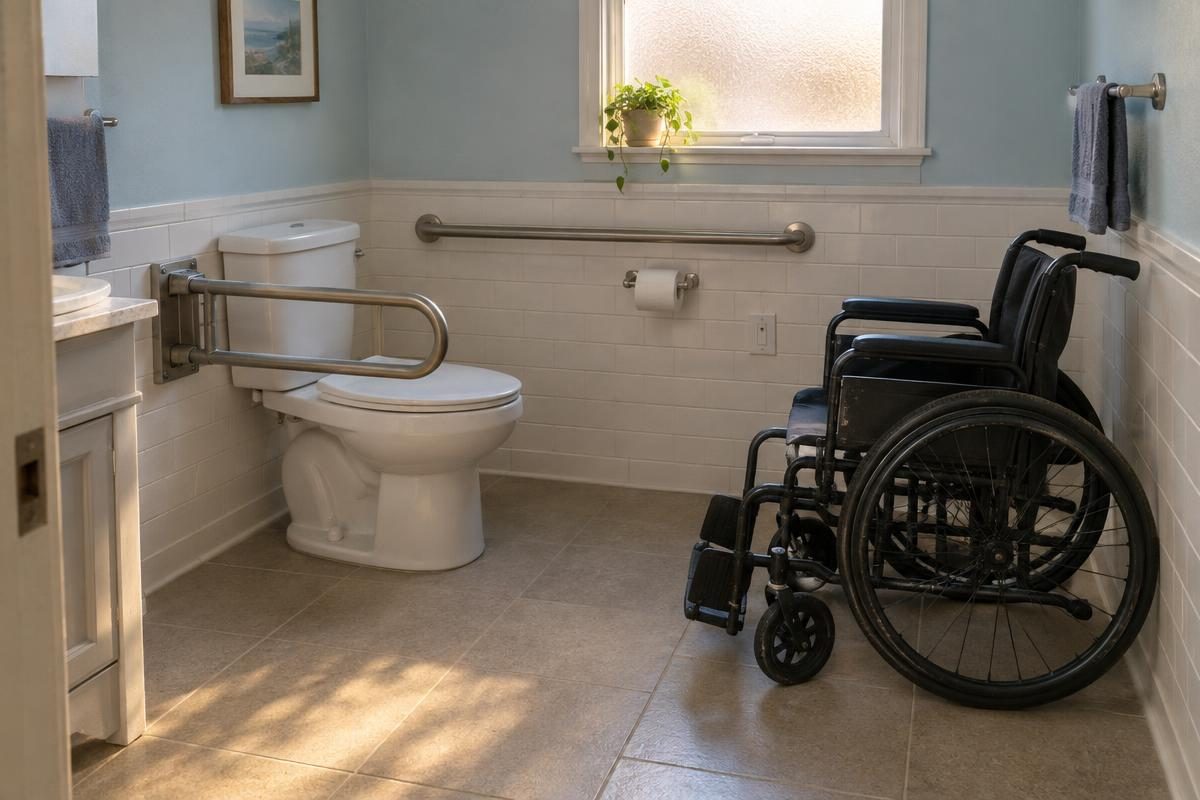
- Wheelchair Access: We design layouts with a 60-inch diameter turning space, doorways that give at least 32 inches of clear opening (usually a 36-inch door), and roll-in entries so wheelchair users can get around without help.
- Code-Based Design: The Americans with Disabilities Act of 1990 governs public and commercial buildings, not private homes, but its design standards are the benchmark we use for every bathroom renovation.
- Tailored Modifications: From walk-in tubs to adjustable sinks, we match the solution to your specific mobility needs rather than applying a cookie-cutter template.
- Smart Fixtures: Hands-free faucets, lever handles, and comfort-height toilets reduce strain for anyone with limited grip strength or joint pain.
- Proven Track Record: After doing this for more than 15 years, we’ve learned which products hold up and which ones contractors oversell.
ADA Measurements Worth Building To at Home
The 2010 ADA Standards for Accessible Design set exact clearances for toilet and bathing rooms. A private home doesn’t legally have to meet them, yet they are the safest starting point because each number solves a specific transfer or reach problem. These are the figures we check most often when planning an accessible bathroom.
| Element | 2010 ADA figure | Why it matters |
|---|---|---|
| Turning space | 60-inch diameter circle (304.3.1) | A wheelchair can turn at least 180 degrees and leave facing forward |
| Door clear width | 32 inches minimum, door open 90 degrees (404.2.3) | The stop and hinge eat into the opening, so a 36-inch door is the usual way to get there |
| Toilet clearance | 60 inches from the side wall by 56 inches from the rear wall (604.3.1) | Room for a side transfer from chair to seat |
| Toilet seat height | 17 to 19 inches to the top of the seat (604.4) | Close to wheelchair seat height, so transfers stay level |
| Toilet centerline | 16 to 18 inches from the side wall (604.2) | Keeps the side grab bar within reach |
| Grab bar height | 33 to 36 inches to the top of the bar (609.4) | A comfortable push and pull height for most adults |
| Grab bar strength | 250 pounds of force at any point (609.8) | A bar that pulls loose mid-transfer causes the fall it was meant to prevent |
| Sink height | Rim or counter 34 inches maximum (606.3) | A seated person can roll under and reach the faucet |
| Roll-in compartment | 30 by 60 inches minimum inside (608.2.2) | Space for a shower wheelchair |
| Hand-held shower | Hose 59 inches long minimum (608.6) | Reaches a seated bather anywhere in the stall |
| Mirror over a sink | Bottom of the glass 40 inches maximum above the floor (603.3) | A seated person can see their face |
Key Features of a Safe Handicap Bathroom
Curbless, Roll-In and Walk-In Shower Options
A curbless shower eliminates the step-over that is behind so many bathroom injuries. Built-in seating, a slider bar for the shower hose and head, and properly positioned grab bars on each side make it possible to bathe from a seated position. This single change is often the highest-impact upgrade in any accessible bathroom modification project.
An accessible shower comes in three common forms. A walk-in shower has a low curb or none and suits someone who stands with support. A roll-in shower keeps its threshold at 1/2 inch or less, so a shower wheelchair rolls straight in. If the user transfers from a wheelchair to a seat, a 36 by 36 inch transfer shower with a fold-down seat can be the better fit, and it takes less floor space. A walk-in tub suits people who want to soak, though the bather sits inside while it fills and drains.
Grab Bars Anchored to Solid Blocking
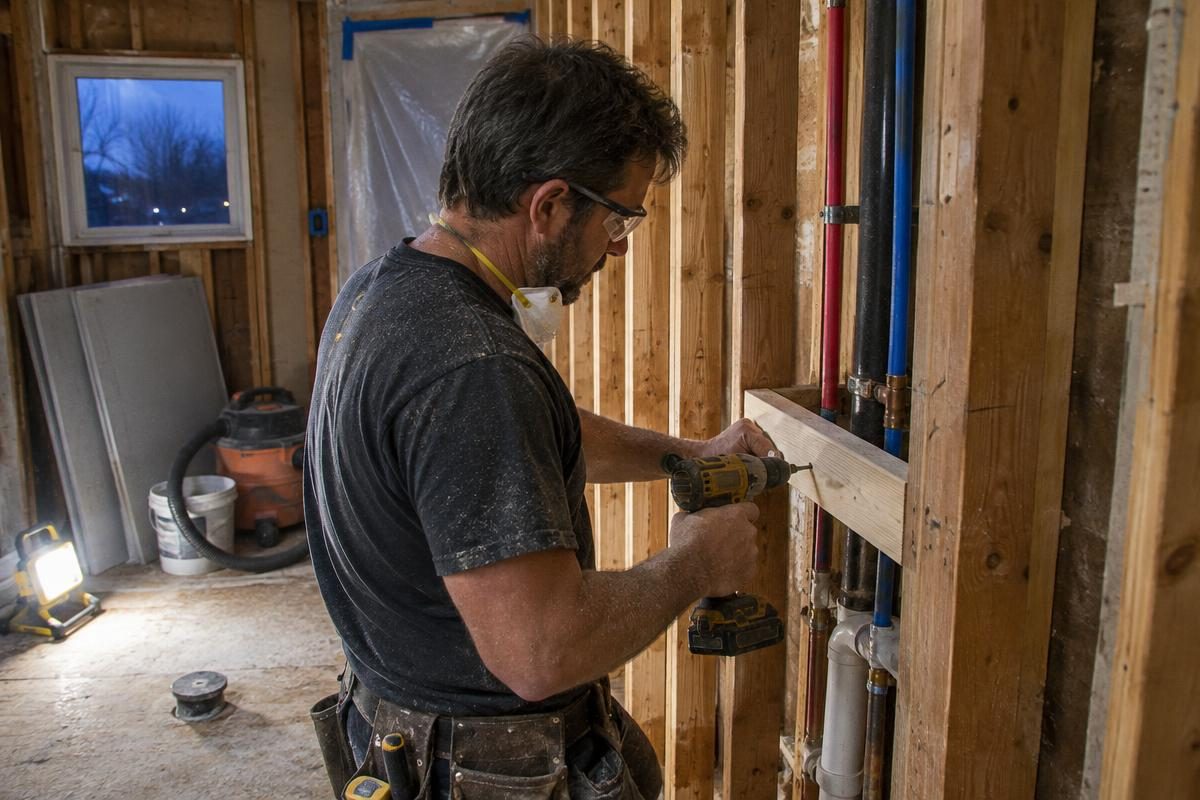
These safety rails belong beside and behind the toilet, inside the shower, and next to the bathtub. They must be anchored into wall studs or reinforced blocking, not just drywall anchors. We install structural backing during the bathroom renovation so every bar holds up to 250 pounds of force. Blocking added now also covers bars the household may need later, which costs far less than opening finished tile.
Slip-Resistant Floor Surfaces
The ADA Standards say only that floor surfaces must be stable, firm, and slip resistant; they set no friction number. Textured porcelain tile with a coefficient of friction above 0.60 is the standard we use. Vinyl plank with slip-resistant coating works well for budget-conscious projects. Either option creates a stable floor surface for wheelchairs, walkers, and bare feet. On a shower floor, smaller tiles add grout lines, and those lines add grip.
Sinks, Faucets, Mirrors and Doors
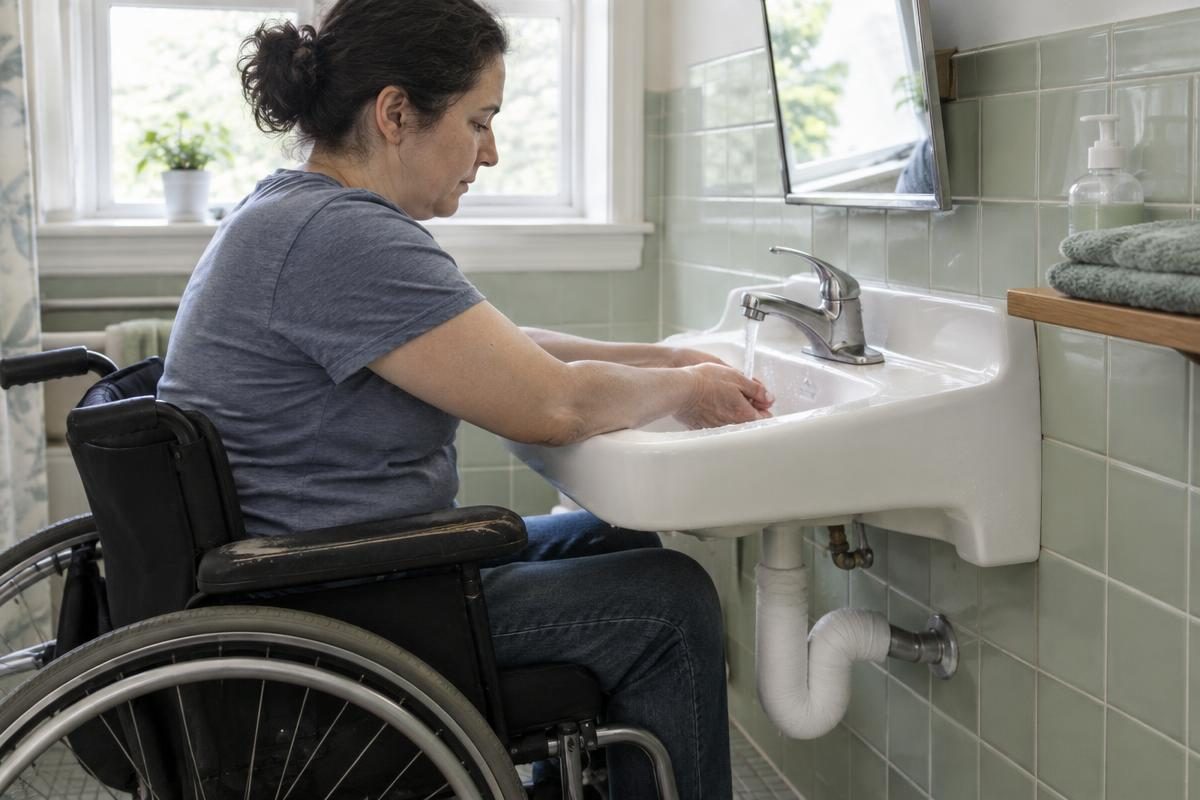
The sink should allow knee clearance underneath for someone in a wheelchair, with the drain and supply pipes insulated or covered so legs never touch a hot pipe. Faucet handles need to be lever-style, not round knobs, because the ADA calls for controls that work with one hand and no tight grasping or twisting of the wrist. We position mirrors low enough for a seated person to see, and we keep the full clear space beside the toilet for safe transfers. A pocket door saves space and eliminates the swinging-door hazard in tight layouts. The same knee-space logic appears in our guide to ADA kitchen sink requirements.
Universal Design and Aging in Place
Universal design means creating a home that works for people of all ages and abilities without looking institutional. Lever handles, wider hallways, and zero-threshold entries benefit everyone, not just those with a disability.
Applying these principles during a renovation costs roughly 5% to 10% more than a standard remodel, but it raises resale value and lets homeowners stay in their house decades longer. Certified aging-in-place specialists (CAPS), a credential from the National Association of Home Builders, are trained to balance aesthetics with function. A practical test: if a visiting grandchild, a parent with a walker, and someone recovering from knee surgery can all use the room without adjustments, the design is doing its job.
Accessible Bathroom Remodel Cost and Funding
Most accessible bathroom remodel projects fall between $5,000 and $25,000 depending on the scope.
What Drives Handicap Bathroom Remodeling Costs
A simple retrofit (grab bars, non-slip floor, shower seat) can run under $3,000. A full gut-and-rebuild with a coordinated kitchen and home modification package pushes toward the higher end. The items that move a quote most are recessing or resloping the floor for a curbless shower, widening a doorway in a load-bearing wall, and relocating the toilet flange to land the 16 to 18 inch centerline.
Paying for the Work: Medicare, Medicaid and VA Grants
Medicare generally doesn’t cover renovations, but Medicaid waivers in some states do. Veterans may qualify for the VA’s Specially Adapted Housing grant. Always check with your insurance provider and local aging services office before starting work.
What to Expect From Our Process
- In-home assessment: We start with a visit that covers door widths, floor condition, plumbing routing, and structural framing.
- Plan and written estimate: From there, we draft a plan that meets your mobility needs and stays within budget.
- Demolition and rough-in: Walls open, drains and supply lines move, and blocking goes in behind every planned grab bar location.
- Finishes and fixtures: Tile, the shower system, toilet, sink, and bars go in at the heights set in the plan.
- Final walkthrough: We review the finished room with you and check each fixture against the plan.
Most projects take two to four weeks from demolition to final walkthrough.
If you’re weighing handicap bathroom remodeling, start by measuring the clear opening of your bathroom door and the floor space beside the toilet, then write down which transfers are hardest today. Contact us through our form to schedule your consultation. We’ll walk through your space, discuss priorities, and provide a written estimate with no obligation.
Frequently Asked Questions
How much does a handicap remodel cost?
Costs typically range from $5,000 to $25,000. Simple upgrades like support bars and a shower seat cost under $3,000. A full remodel with walk-in tub, wider doors, and new flooring costs more. Hiring a certified aging-in-place specialist helps you prioritize upgrades that deliver the biggest safety improvement per dollar.
Will Medicare pay for a bathroom remodel?
Medicare doesn’t usually cover home modifications. Some Medicaid waiver programs do, and VA grants are available for qualifying veterans. Your state’s Area Agency on Aging can point you toward local funding options.
What are the accessibility requirements for a residential bathroom?
The Americans with Disabilities Act covers public accommodations and commercial facilities rather than private homes, but its 2010 design standards are the benchmark for residential bathroom projects. Key specs include a 60-inch diameter turning space, a door with at least 32 inches of clear width, grab bars that support 250 pounds, and ramp slopes no steeper than 1:12 (see the maximum slope of a handicap ramp).
What is the minimum size for a wheelchair-friendly layout?
Plan for at least 5 feet (60 inches) of clear floor diameter so a wheelchair can make a full turn. The door should give at least 32 inches of clear width, which usually means a 36-inch door. Leave a clear space 60 inches wide by 56 inches deep at the toilet, and 30 by 48 inches in front of the sink, for safe transfers and a forward approach.
How do I find reliable bathroom contractors near me?
Search for professionals with CAPS certification or specific accessibility-compliant project experience. Check reviews, ask for references from past projects, and confirm they carry liability insurance. A reputable contractor will do an in-home assessment before quoting.