
Handicap kitchen remodeling rebuilds the room so a person who uses a chair, walker or cane can cook, store food and clean up without help. It changes four things: the floor space to turn and approach each appliance, the height of at least one work surface, where storage sits inside a seated reach, and how the cooking and water controls operate.
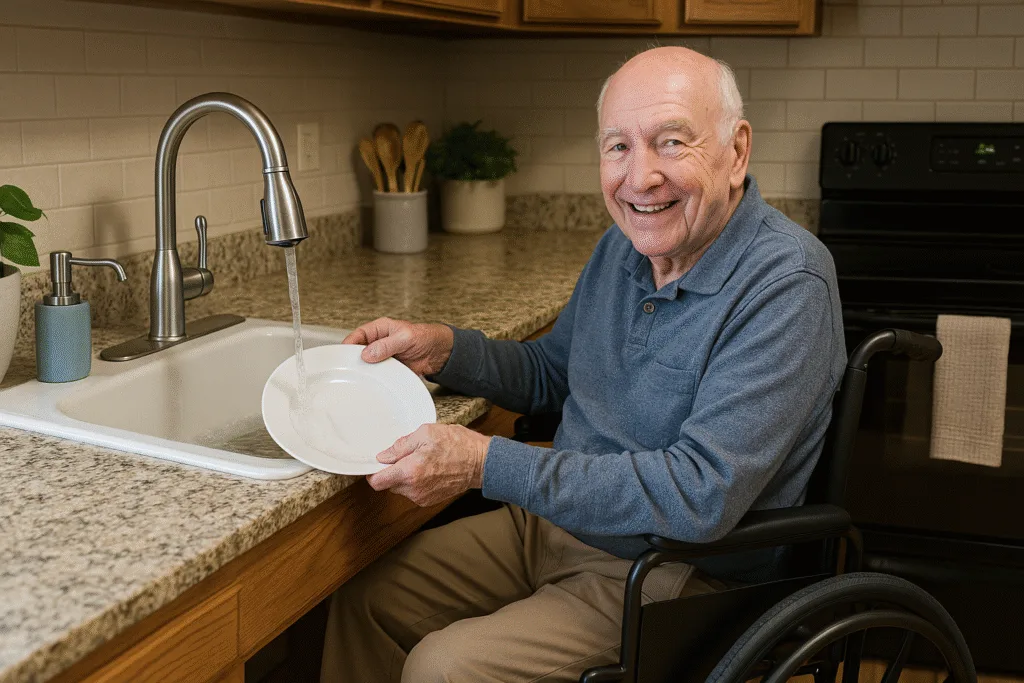
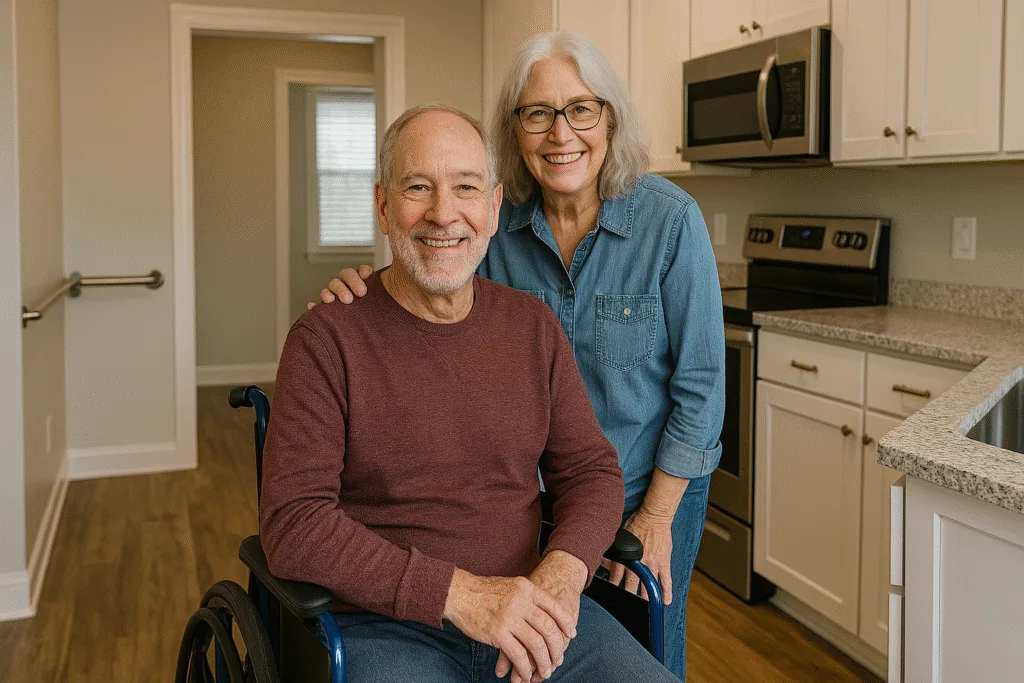
Most designers work from the 2010 ADA Standards for Accessible Design, Section 804 (kitchens and kitchenettes). The Americans with Disabilities Act does not cover private single-family homes, so these numbers aren’t legal requirements for your house. They are the most widely used published measurements, though, and a remodel built to them gives a wheelchair accessible kitchen that also suits guests, caregivers and a future buyer.
Clear Floor Space and Kitchen Layout
Floor space comes first, because nothing else works if the chair can’t get there. Section 304.3.1 calls for a 60 inch diameter turning circle (a T-shaped space inside a 60 inch square is the permitted alternative), and each appliance needs a 30 by 48 inch clear space in front of it (Section 305.3).
A galley open at both ends needs 40 inches between opposing cabinets; a U-shaped plan needs 60 (Section 804.2). That’s why kitchen design for a chair usually favors L-shaped and open U layouts: they leave plenty of room to turn without stretching the work triangle.
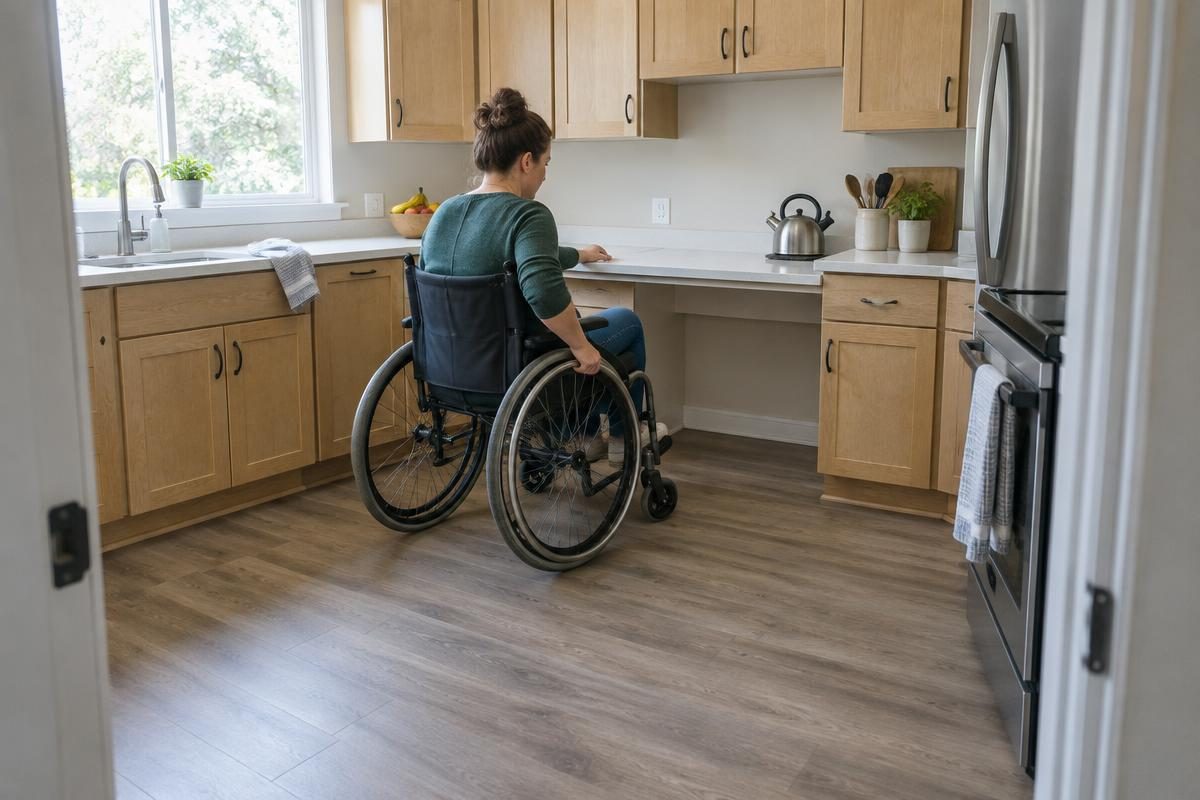
Doorways need 32 inches of clear width with the door open 90 degrees (Section 404.2.3), and a 36 inch door is the usual way to get there. Widening a 28 or 30 inch opening typically costs $300 to $800, depending on whether a load-bearing header is involved. The guide to accessible home entrances covers the front door.
Countertops at Seated Height
A seated cook needs a surface between 28 and 34 inches high, against the standard 36. Section 804.3 asks for at least one 30 inch wide work surface at that height, with knee and toe clearance below so the chair can roll under. Most mixed households do best with two heights: 36 inches for standing family members and a lowered run for the seated cook.
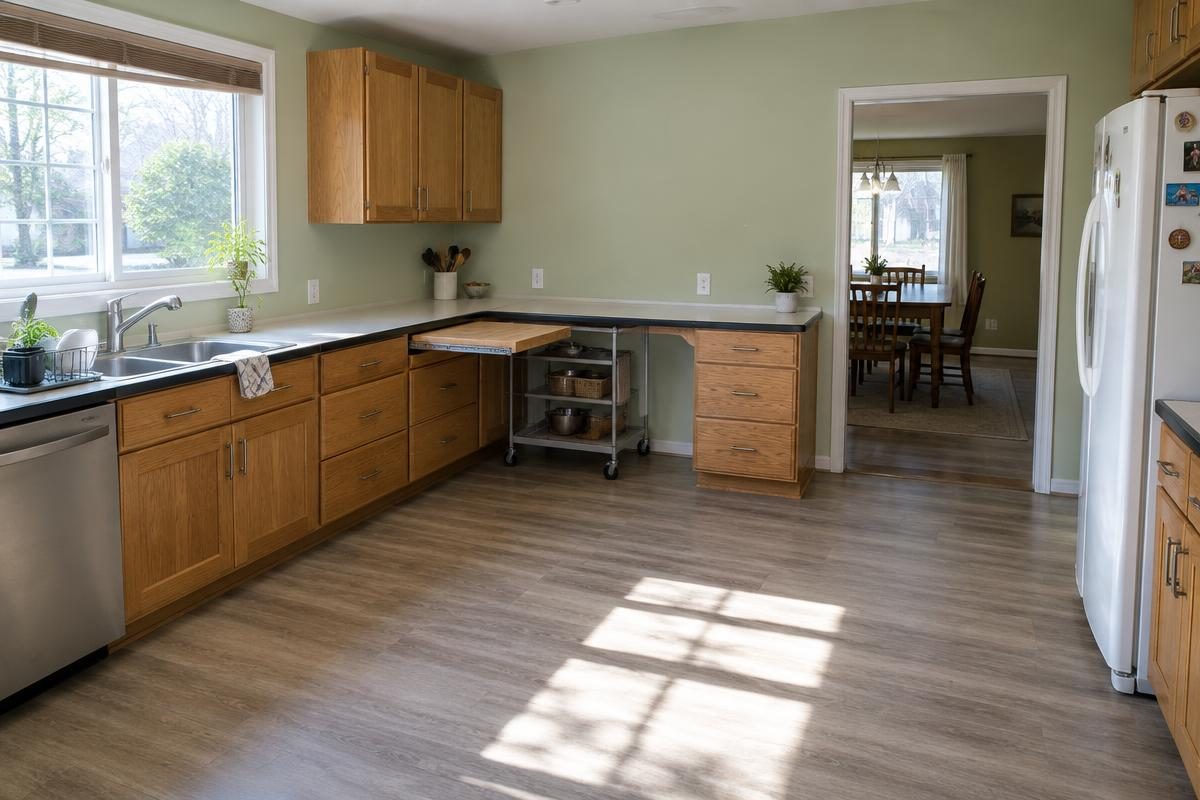
Motorized adjustable-height countertops serve both but cost far more. A pull-out cutting board at about 30 inches is the cheap way to add a second seated surface for chopping and mixing.
Cabinet Storage and Hardware Within Reach
Section 308 sets the unobstructed forward reach between 15 and 48 inches above the floor, dropping to 44 inches over a 20 to 25 inch deep counter. Standard upper kitchen cabinets start around 54 inches, so their bottom shelf is already out of range.
Lower cabinets earn their space with full-extension drawers instead of doors, because a drawer brings the contents to the person instead of making them lean in. Corner cabinets take a lazy Susan, pull-down shelf systems inside upper cabinets lower spices with one hand, and the top pull-out keeps frequently used items within reach.
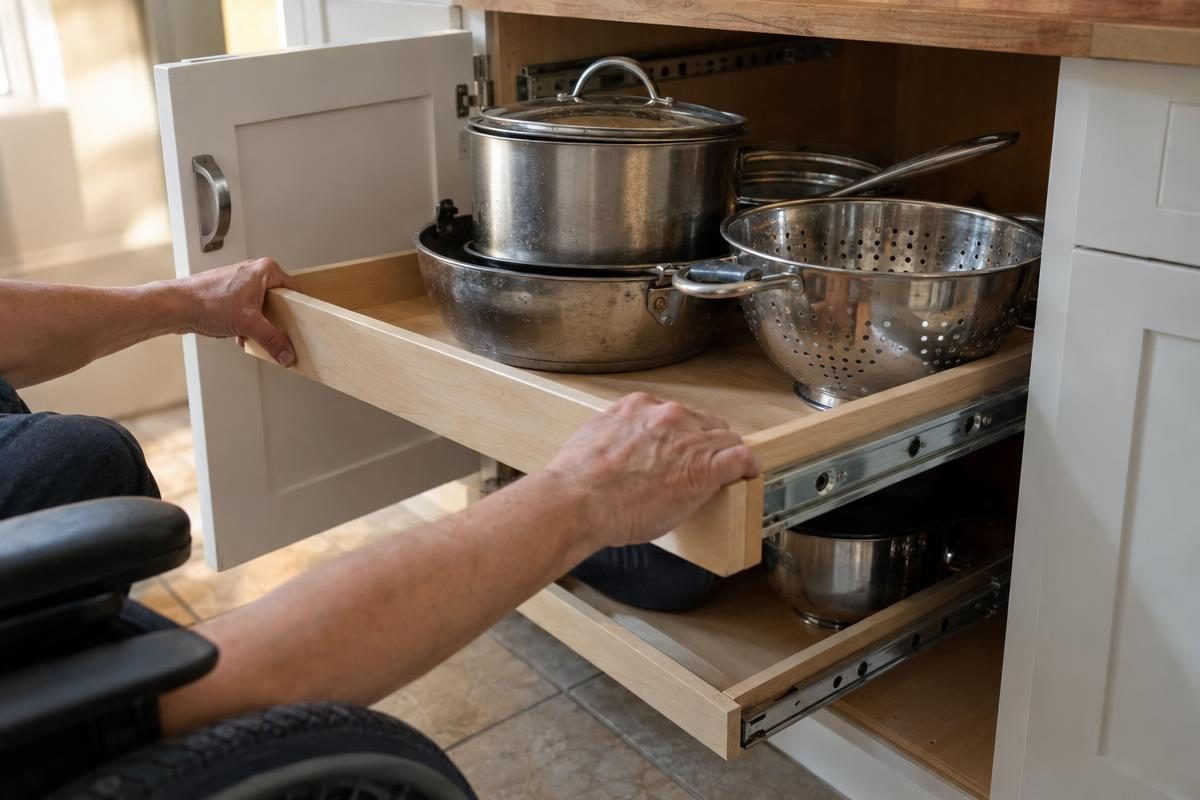
Round knobs are hard to turn with limited grip strength, while D-shaped pulls or touch latches cost almost nothing extra. The handicap bathroom remodeling service follows the same approach in other rooms.
Sink and Faucet Basics
The sink needs a roll-under base: the cabinets under the sink come out, and exposed supply and drain pipes are insulated or shielded against burns (Section 606.5). Rim height and knee and toe depths are in the guide to ADA sink requirements, so they aren’t repeated here.
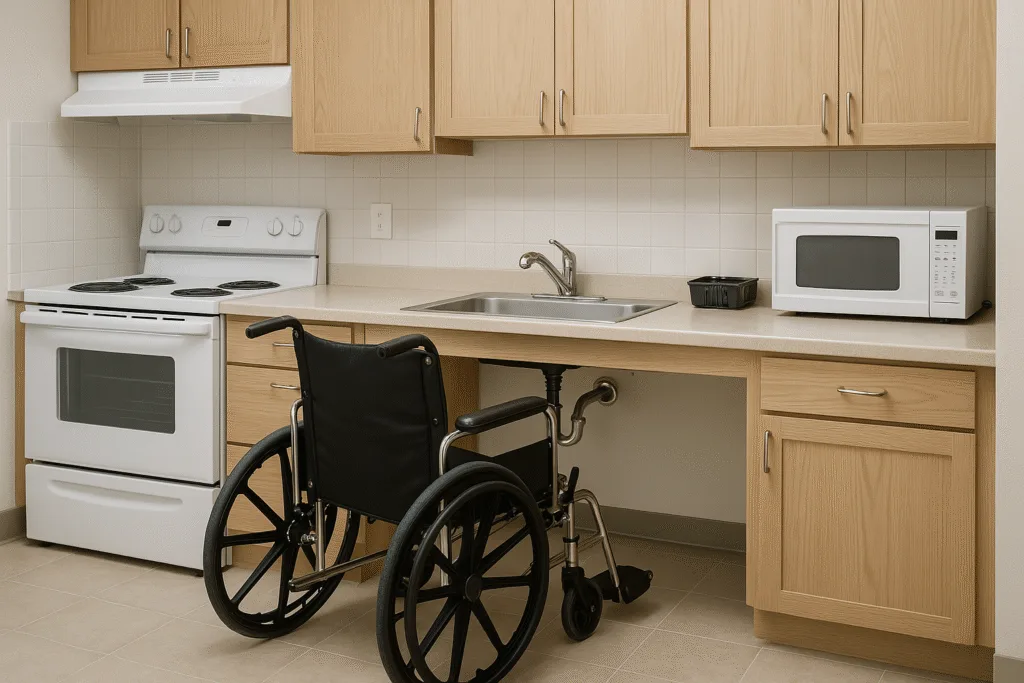
A single-lever or touchless tap mounted toward the side of the bowl removes the need to grip, twist or reach across the basin to control flow and temperature.
Cooktop, Oven and Refrigerator Choices
Controls must never require reaching across hot burners (Section 804.6.4), so they belong on the front edge or the side. Induction suits people with limited mobility: it heats the pan magnetically, the glass warms only from the cookware and cools quickly, and there’s no open flame near a sleeve.
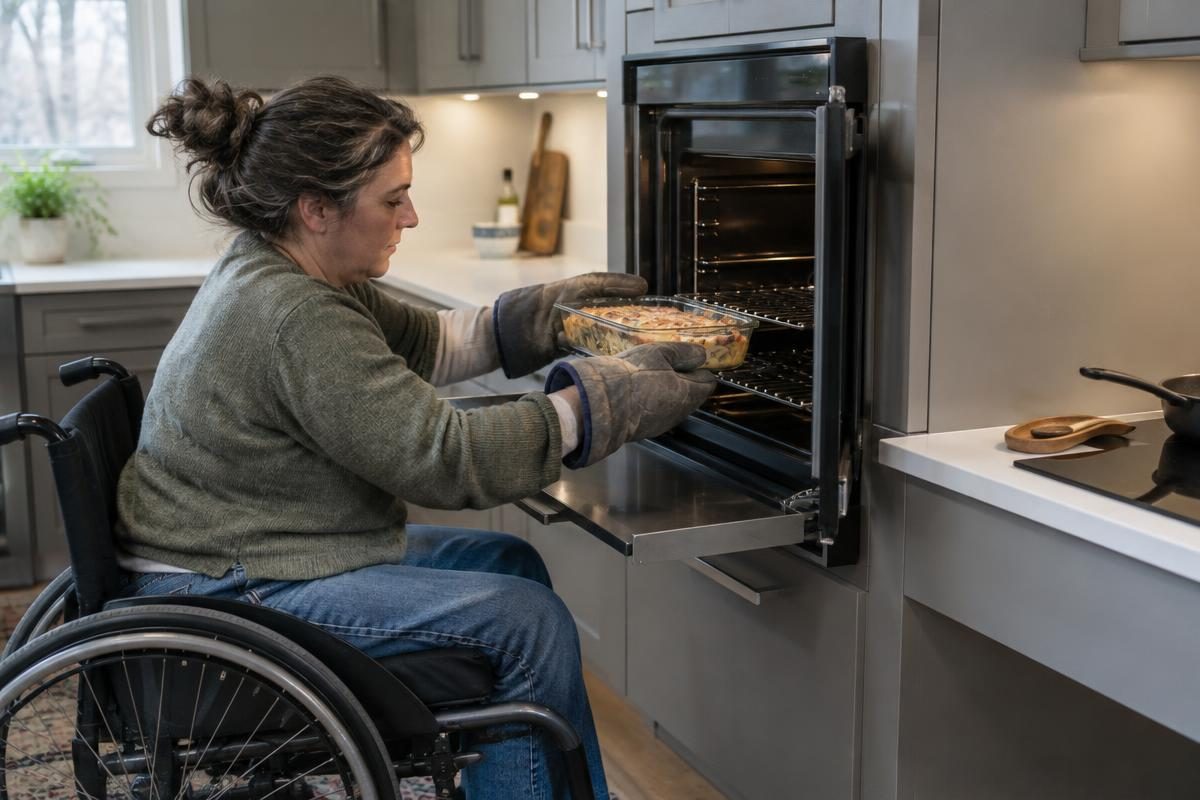
Wall ovens with the rack near counter height remove the low, heavy lift a standard range demands. A side-opening door gives direct access, and Section 804.6.5 pairs a side-hinged oven with a countertop beside the latch side so a hot dish can be set down at once.
For the refrigerator, Section 804.6.7 puts at least half of the freezer space at 54 inches or lower. Side-by-side and bottom-freezer models usually comply; top-freezer models often don’t.
Floors, Lighting and Outlets
Section 302.1 asks for floors that are firm, stable and slip resistant. Falls are the leading cause of injury for older adults, and polished stone gets slick when wet, so textured tile or vinyl plank with a coefficient of friction above 0.6 is a common target. A short threshold ramp removes the lip between rooms; for the outside entry, see wheelchair ramp installation.
Switches belong at 48 inches or lower. Outlets at 18 to 20 inches instead of the usual 12 mean no need to bend to plug in a mixer.
Matching the Remodel to the Person Who Uses It
Universal design, the practice of shaping a space so people of any age or ability can use it, is the safest default, but the best way to make your kitchen more accessible still shifts with each person’s accessibility needs.
For Someone Who Uses a Wheelchair Full Time
Turning space, a roll-under sink, one lowered work surface and a wall oven are the core four. Leave one out and the cook still has to ask for help.
For a Walker or Cane User
Support matters more than floor space. Work surfaces can stay at 36 inches, but continuous runs to lean on, a perch stool at the prep area and pull-out storage for easy access do most of the work.
For Aging in Place or a Progressive Condition
Build the expensive parts once. Wall blocking for future grab rails, a removable sink base and 32 inch clear openings cost little during a kitchen remodel and spare homeowners a second tear-out when needs change.
Planning Handicap Kitchen Remodeling With Handicap Remodeling
Handicap Remodeling focuses on aging in place modifications and disability-friendly construction, from single upgrades such as new pulls to full rebuilds. It also handles handicap shower upgrades and full-home accessibility improvements, so the kitchen and bathroom can be done in one project.
Start by measuring the narrowest door opening and the clear space in front of the sink and range, then list the tasks the cook can’t do today. Contact us through our form to schedule a free consultation and a detailed estimate, so handicap kitchen remodeling can happen in one project or in phases.
Frequently Asked Questions
How do I make my kitchen handicap accessible?
Lower one work surface to between 28 and 34 inches, get at least 32 inches of clear width at the door, and replace low cabinet doors with pull-out storage. Non-slip flooring and lever or touchless taps round out a solid first phase.
What are the ADA rules for kitchens?
The 2010 ADA Standards call for a 60 inch diameter turning space, 40 or 60 inches between opposing cabinets depending on the plan, a 30 by 48 inch clear space at each appliance, and at least one 30 inch wide work surface 28 to 34 inches high. They apply to public and commercial buildings, not private single-family homes, but following them ensures real usability.
What does an ADA compliant kitchen look like?
An ADA compliant kitchen has open floor space, a roll-under sink, a lowered work surface, pull-out storage below 48 inches, and cooktop controls at the front. Switches and outlets sit where a seated person can reach them.
How much does handicap kitchen remodeling typically cost?
A full accessible kitchen renovation ranges from $15,000 to $50,000 depending on scope. Individual modifications like widening a doorway ($300 to $800) or adding pull-down fixtures ($150 to $400 each) can be done in phases to spread the cost.