
Wheelchair ramp installation gives a wheelchair user a step-free way to access the front door, a side entry, or a business entrance without being lifted or carried. At Handicap Remodeling, we design and install custom wheelchair ramp solutions that follow federal accessibility standards, fit your property’s layout, and hold up through years of daily use. Whether you need a permanent structure for a loved one or a portable ramp for short-term recovery, our team handles every step from measurement to final walkthrough.
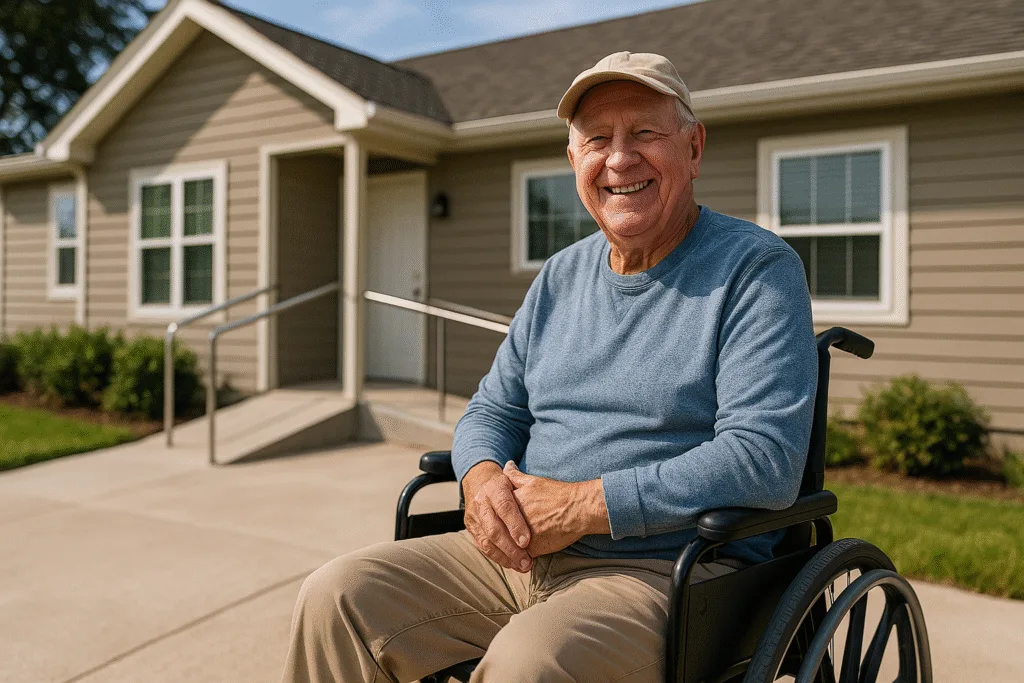
Why Step-Free Access Matters at Home
About 3.6 million Americans use a mobility device to get around. For many of them, a single step or a few front steps turn their own home into an obstacle. That’s not a minor inconvenience. It’s a safety risk that leads to falls, isolation, and lost independence.
The Americans with Disabilities Act of 1990 (ADA) limits slope to 1:12 at businesses and public buildings. It does not cover private single-family homes, but we apply the same standard to residential projects because it’s the safest grade for a manual chair or a power wheelchair.
What Happens During a Wheelchair Ramp Installation
A professional install follows four stages, and most safety decisions happen before anyone sets a post.
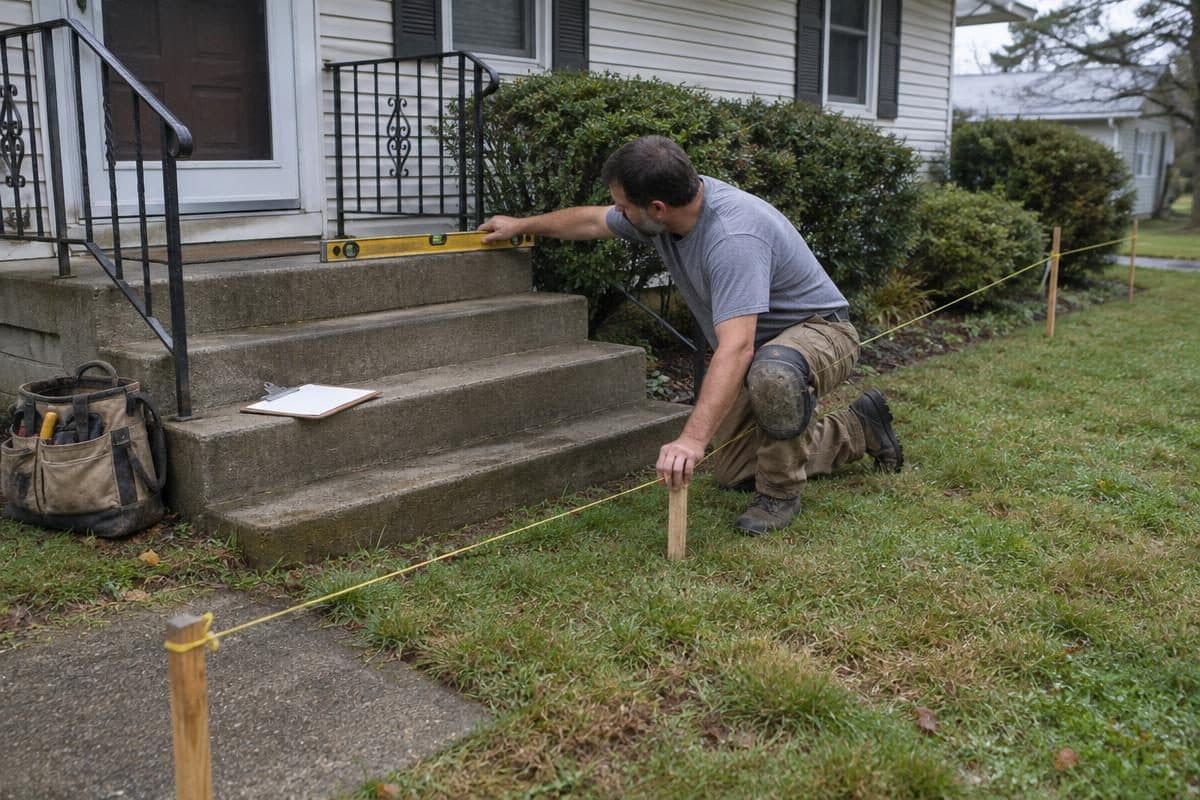
- Free in-home assessment. We measure the total rise from the ground to the door threshold, check the door swing, and look at drainage and grading. The rise sets the length; the grading decides where water goes.
- Choose the type of ramp. We present options based on your budget, timeline, and how long you’ll need the solution.
- Review the custom design. You approve the layout, slope, width, landings and railings before work starts.
- Professional installation and walkthrough. Every project includes slip-resistant surface treatment and a final compliance check, and we don’t consider a job complete until you’ve tested it yourself.
Drainage matters more than most homeowners expect. The 2010 Standards require outdoor surfaces to be designed so water does not accumulate (405.10), because a run ending in a low spot turns into ice exactly where a wheelchair has to stop and turn.
Modular, Portable, Wood or Concrete: Which Option Fits Your Home
The right choice depends on how long you’ll need it and how high the entrance sits. This table compares the residential wheelchair ramps we install most often.
| Type | Best for | Timeline | Upkeep |
|---|---|---|---|
| Modular aluminum | Rises of 1 to 3 feet | Fastest to install, no footings | Little to none |
| Threshold | Doorway lips of 1 to 4 inches | Placed at the doorway | Check that it has not shifted |
| Portable | Travel and short-term recovery | Set up by hand | Inspect hinges and weight rating |
| Wood or concrete | Permanent, long-term access | Longest build: footings, framing or concrete curing | Annual sealing (wood), minimal (concrete) |
Modular Aluminum Wheelchair Ramps
These sections bolt together without permanent foundation work, so they’re the fastest to set up and the easiest to relocate. Aluminum doesn’t rot, rust, or require painting, and it gives you the service speed you need when a hospital discharge date is close.
Threshold and Portable Options
A threshold ramp, the simplest option to install, handles small elevation changes at doorways, typically 1 to 4 inches. Portable wheelchair ramps fold for travel and fit most standard door widths. Check the weight capacity: a retail product rated for 300 pounds leaves almost no margin when a motorized chair alone weighs 250. Being short, a portable unit also runs steeper than a built structure, so it suits assisted use better than independent use.
Permanent Wood or Concrete Structures
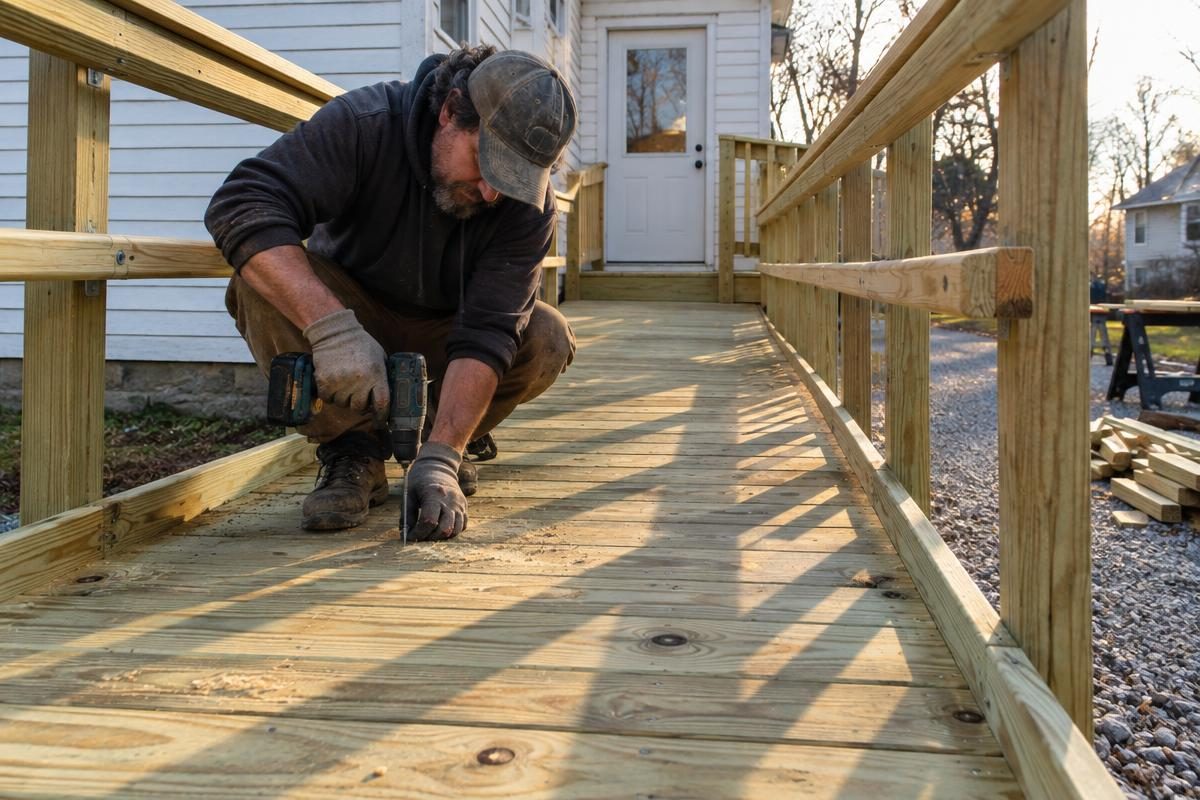
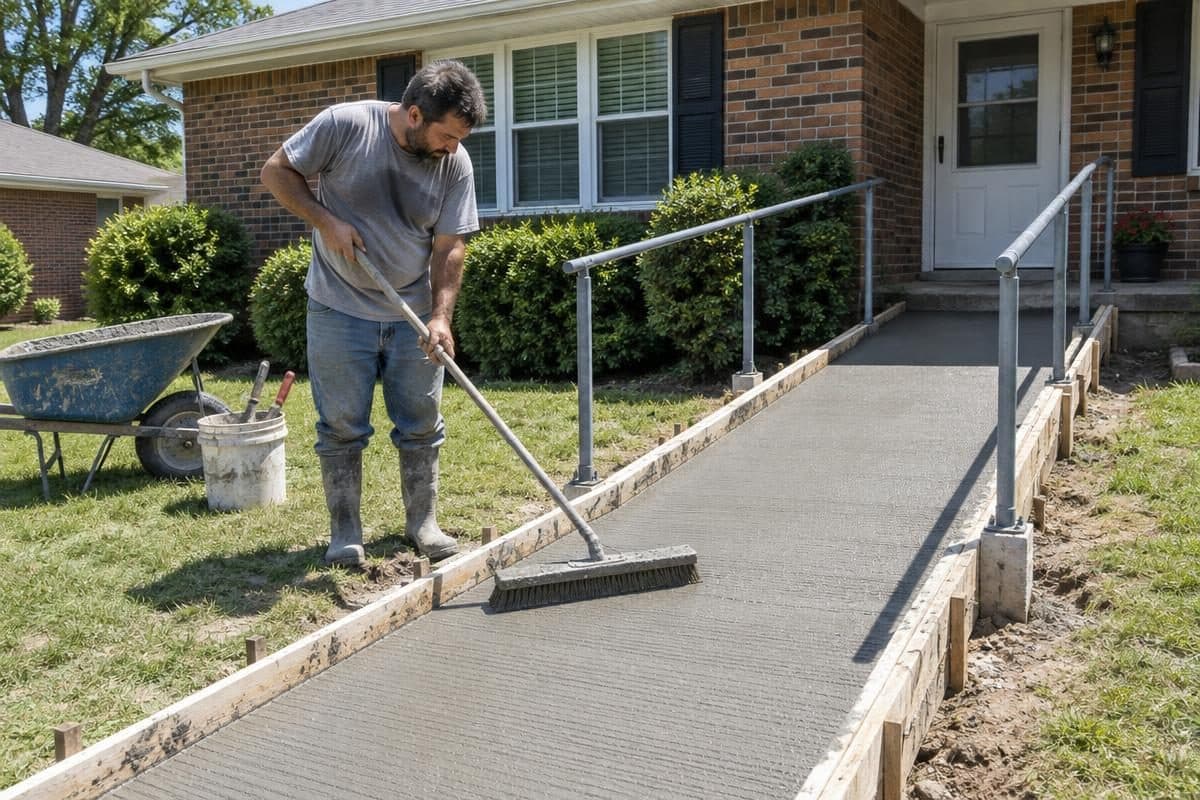
For long-term needs, a permanent structure offers the best durability and curb appeal. Wood requires annual sealing but blends with most home exteriors; concrete is virtually maintenance-free but costs more upfront and can’t be relocated.
How Much Length Does Your Entry Need?
At a 1:12 slope, every inch of rise needs 12 inches of run, so a 24-inch rise needs at least 24 feet before landings are added. That’s why access to a high porch often wraps along the house or doubles back on a 60 by 60 inch turning landing. If you’re unsure about the maximum slope for a handicap ramp, we can walk you through the specifics during your consultation. When the yard can’t hold the length, a vertical platform lift or a stair lift may be the better fit.
Accessibility Specifications We Build To
The 2010 ADA Standards for Accessible Design set the measurements for public access routes, and they make a sound baseline for homes too:
- Running slope no steeper than 1:12 (405.2) and cross slope no steeper than 1:48 (405.3).
- Clear width of at least 36 inches between the railings (405.5).
- No more than 30 inches of rise in any single run (405.6), with level landings at least 60 inches long at the top and bottom (405.7).
- Railings on both sides when the rise is more than 6 inches (405.8), gripping surface 34 to 38 inches high (505.4).
- Edge protection, such as a curb or barrier, so a wheel cannot slip off the side (405.9).
The top landing needs the most planning. Where it serves a door, the door’s maneuvering clearance may overlap the landing (405.7.5), but it still has to exist. An outward-swinging storm door on a bare 60-inch landing leaves no flat space to pull it open, so that landing often gets enlarged or the storm door rehung.
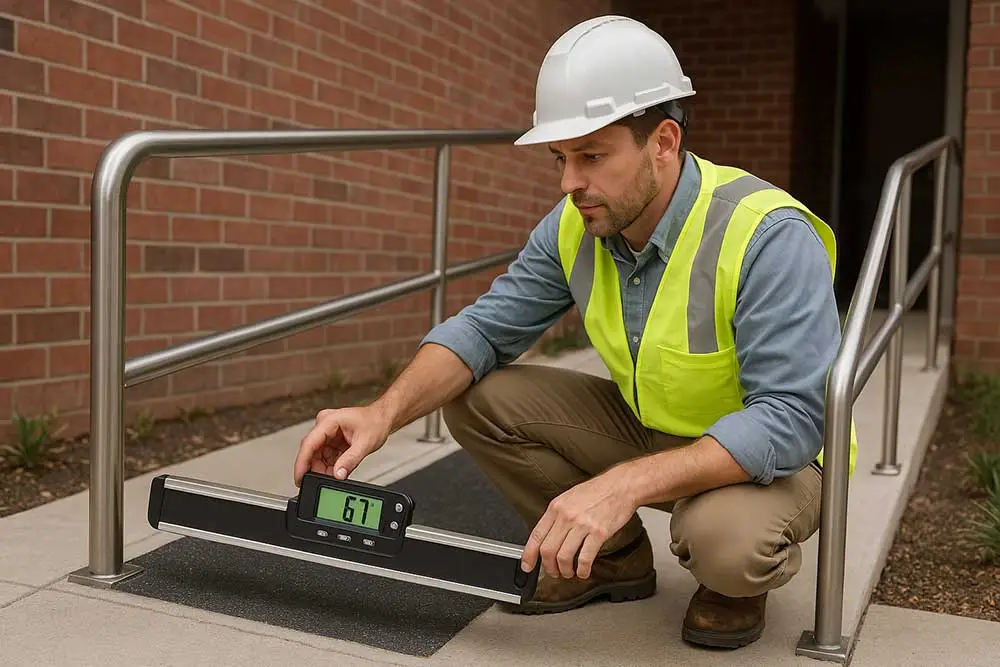
A permanent build may also need a local building permit. Understanding what makes an entrance fully accessible goes beyond the slope: it includes threshold height, door width, approach clearance, and surface texture. The U.S. Access Board guide explains each provision in plain language.
What Drives the Cost of Your Project
The total price depends on the rise height, the length needed to maintain a 1:12 slope, materials, and site conditions. Here’s a realistic breakdown:
- Standard residential projects: $1,000 to $3,000 for prefabricated aluminum covering a 1 to 3 foot rise
- Mid-range custom builds: $3,000 to $8,000 for wood or composite structures with landings and turns
- Complex projects: $8,000 to $15,000+ for long runs, concrete, or multi-level access with platform lifts
Medicare typically does not cover these home modifications. However, Medicaid waivers in some states do, and many local nonprofits offer grants for veterans and seniors with limited mobility. We help clients sort through funding options during the consultation.
Considering other home modifications? Our team also handles accessible bathroom remodeling, barrier-free shower conversions, handicap bathroom modifications, and accessible kitchen remodeling to make your entire home work for you.
What Our Clients Say
“The installer was great, and the product looks amazing. It functions very well and is strong and supportive. I’m very pleased.” Our clients consistently tell us that the professionalism of our crew and the quality of the finished product exceed their expectations.
“Glad I called. They helped us get our son in and out of the house safely. The product was amazing.” The feedback that means the most is hearing that families feel safer in their own homes.
Schedule Your Free Consultation
Ready to make your home safer and more accessible? Fill out our contact form. We’ll schedule a free in-home assessment, take measurements, and present options that fit your budget and timeline.
Start by measuring from the ground to the top of your door threshold and noting which way the door swings; those two numbers shape a wheelchair ramp installation from the first sketch. Short-term needs suit a modular or portable option, permanent ones wood or concrete. Don’t wait for a fall to make the change: contact us and we’ll help you choose the right approach.
Frequently Asked Questions About Wheelchair Ramp Installation
How much does it cost to install a wheelchair ramp?
Standard residential projects range from $1,000 to $3,000 for prefabricated aluminum. Custom wood or concrete structures run $3,000 to $15,000+ depending on rise height, length, materials, and site conditions. We provide free estimates during your in-home consultation.
Will Medicare pay for home wheelchair ramp installation?
Medicare typically does not cover these modifications. Some Medicaid waiver programs, VA benefits for veterans, and local nonprofit grants may help offset costs. We assist clients in identifying available funding sources during the planning process.
What is the correct slope for a wheelchair ramp?
Federal accessibility standards set a maximum slope of 1:12, meaning one inch of vertical rise for every 12 inches of horizontal run. For a 30-inch rise, that means at least 30 feet of sloped length plus a level landing at each end. Steeper slopes are dangerous for people with limited mobility and violate federal accessibility standards at public facilities.
Do these structures work with power mobility devices?
Yes, but weight capacity matters. A standard motorized device weighs 150 to 250 pounds, plus the user’s weight. Make sure any solution is rated for at least 600 pounds to provide a safe margin.